 English
 polski
 What’s new
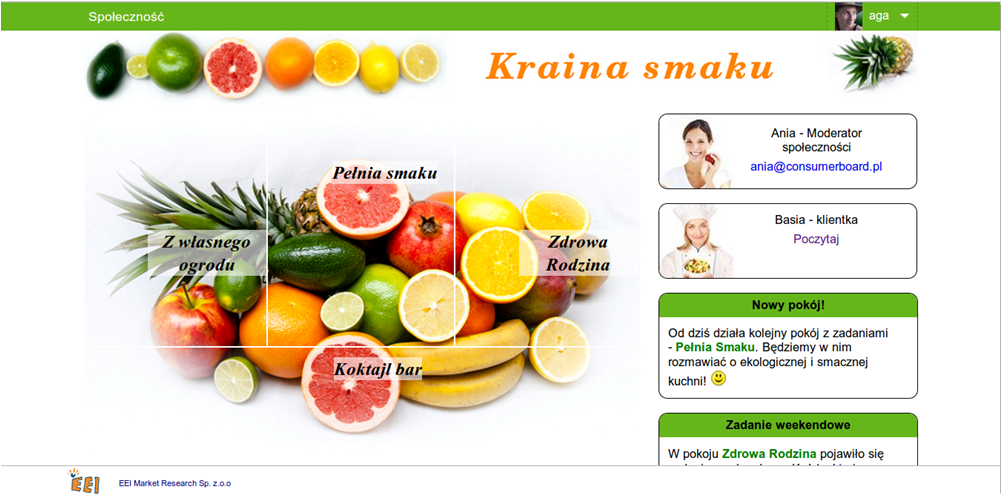
Take part in the market research revolution and use the most effective research method. Visit www.consumerboard.pl and contact us on awiszniewska@eei.com.pl, jkomor@eei.com.pl.
If you’re planning to become a moderator of an online community, be prepared as this task will draw you in and keep you occupied 24 hours a day! While moderating groups in real life means you have to mobilize yourself for several hours, online community research dynamics spread out over several weeks. Online respondents can’t see you face- to-face,
In September 2011 Polskie Towarzystwo Badaczy Rynku i Opinii (Polish Society of Market and Opinion Researchers) conducted a quantitative study on a sample of 436 Clients research agencies in Poland. It turned out that EEI provides its services to the largest Clients – who conduct an average of 68 projects a year (compared to the average of 17 for the sector), and cooperate with 9 research agencies (vs. 4 on average for the sector). It is obvious
It would seem that there is no simpler method than a monadic test if you intend to choose the optimal product formula, or a new packaging design. All you need is 2-3 cells with at least 100 respondents in each, and you can go ahead. Sure thing, but…. Monadic tests are characterised by very restrictive assumptions, which affects the sample selection process. Each person within a given leg should have an appropriate demographic and usage equivalent in another leg. We have
Research facility
The location of the EEI research facility is located prestigious – near the Old Town and the Presidential Palace. Thanks to easy access and attractive location which is chosen by many Warsaw residents for walks we can more easily recruit respondents for both qualitative studies, and Central Location Tests.
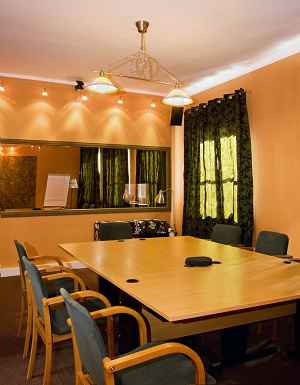
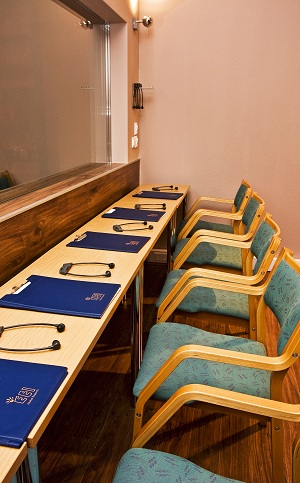
Our lab is:
♦ a modern, spacious FGI facility fully equipped with all the necessary multimedia solutions, FocusVision online data transmission, videostreaming
♦10 central location test stands with unlimited access to the Internet.